Friday, November 9, 2018

Veeco and ALLOS Collaborate to Advance microLED Tech

Plainview, N.Y., Nov. 8, 2018—Veeco Instruments Inc. (Nasdaq: VECO) and ALLOS Semiconductors GmbH announced today the completion of another phase of their mutual effort to provide the industry with leading GaN-on-Silicon epiwafer technology for microLED production. The purpose of the companies’ most recent collaboration was to demonstrate the reproducibility of ALLOS’ 200 mm GaN-on-Si epiwafer technology on Veeco’s Propel® MOCVD reactor when producing epiwafers for many prominent global consumer electronics companies.

“To bring microLED technology into production, simply presenting champion values for a single metric is insufficient. It is essential to achieve the whole set of specifications for each wafer with excellent repeatability and yield,” said Peo Hansson, Ph.D., senior vice president and general manager of Veeco’s Compound Semiconductor business unit. “This successful joint effort reaffirms the power of combining Veeco’s superior MOCVD expertise with ALLOS’ GaN-on-Silicon epiwafer technology to provide customers a novel, proven and reliable approach to accelerate microLED adoption.” 


Tuesday, November 6, 2018

Leading Provider of Semiconductor Manufacturing Services Selects Veeco's AP300E to Support Aggressive Advanced Packaging Expansion


One of the World’s Largest Outsourced Assembly and Test Providers Names AP300E™ Their Preferred Lithography System Due to Veeco’s Industry-Leading Uptime and Process Performance

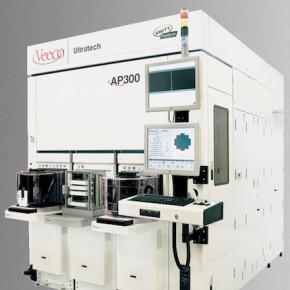
Nov. 06, 2018—Veeco Instruments Inc. (Nasdaq: VECO) announced today that one of the world’s largest outsourced assembly and test (OSAT) providers has purchased multiple Veeco AP300E lithography systems. Complementing the OSAT’s previously installed Veeco tools, the AP300E was selected based on its superior uptime, lower total cost of ownership (CoO) and exceptional performance. This purchase is illustrative of continued strong market demand for Veeco’s expanding portfolio of lithography systems, given the tools’ ability to handle next-generation advanced packaging process needs including copper (Cu) pillar, wafer-level packaging (WLP), fan-out WLP (FOWLP) and 3D integrated circuit developments. 
 
 
Veeco AP300, The AP200/300 family of lithography systems is built on Veeco’s customizable Unity Platform™, delivering superior overlay, resolution and side wall profile performance and enabling highly-automated and cost- effective manufacturing. These systems are particularly well suited for copper pillar, fan-out, through-silicon via (TSV) and silicon interposer applications (veeco.com).
The AP300E lithography stepper’s exceptional overlay, resolution, sidewall profile performance and broadband flexibility enable highly automated, cost-effective manufacturing valued by foundries and OSATs for applications such as fan-in WLP, FOWLP, through-silicon via, silicon interposer solder and Cu pillar bumping. Given the exponential market growth expected in mobile, IoT and artificial intelligence (AI) applications, OSATs seek to ensure they are competitively positioned to drive customer acquisition and retention. According to Yole, the equipment and materials market for FOWLP alone will expand at a compound annual growth rate (CAGR) of 43 percent to reach $694 million by 2021.

“Increased mobility, IoT, AI and deep learning are seeing explosive growth in step with global megatrends, all of which are enabled by technologies like 3D integration and advanced packaging,” noted Peter Porshnev, Ph.D., senior vice president and general manager of Veeco’s Ultratech business unit. “As we grow our customer base, Veeco’s experienced team of technologists continues to work closely with OSATs and foundries to deliver industry-leading innovations that directly address their performance, yield and CoO challenges.”

SK Hynix 96-Layer 512Gb TLC NAND

SK Hynix Inc. Launches the World’s First ‘CTF-based 4D NAND Flash’ (96-Layer 512Gb TLC)

Seoul, November 4, 2018 – SK Hynix Inc. (or ‘the Company’, www.skhynix.com) launched the world’s first 96-Layer 512Gb (Gigabit) ‘CTF based 4D (Four-Dimensional) NAND Flash (4D NAND)’ based on its TLC (Triple-Level Cell) arrays, using 3D CTF (Charge Trap Flash) design paired with the PUC (Peri. Under Cell) technology. The Company will start the early stage of mass production of the 96-Layer 4D NAND within this year. A single 512Gb NAND Flash chip can represent 64GB (Gigabytes) storage.


Source : SK Hynix (LINK)

Sunday, November 4, 2018

Foundry investment in 5nm has started according to ASM

Here are some take aways form the ASM International Earnings Call for Q3/2018 [Full transcript by Seeking Alpa, LINK]. Interestingly there was no talk about "The end of Moore´s Law" at all. On the contrary ASM see that Foundry investment in 5nm has started and will increase in 2019 and incearsed number of additional new ALD applications will be deployed.

For ASM the equipment sales were led by their ALD business, but they also recorded healthy sales levels in our other product lines. By industry segment, revenue in the quarter was led by foundry, followed by memory and then logic. Within memory the larger part of sales was related to DRAM investments, while NAND sales decreased compared to the second quarter. 
"The structural outlook for the ALD market remains strong. ALD continues to be a key enabler of Moore's Law. An increasing number of ALD steps will be needed to help create the smaller geometries, new materials, and more complex device architectures that are on our customers' roadmap." 
- Chuck del Prado, President and CEO of ASMI.
  • Spending in the advanced logic segment is clearly higher in 2018 compared to last year.
  • Foundry spending is lower this year and is driven by further 7-nanometer investments as well as the first investments in 5-nanometer. 
  • Investments for the 5-nanometer node are likely to further increase in the course of next year.
  • ASM expectation is that the 5-nanometer foundry node is going to be an important transition for the company, with good opportunities to expand with multiple new ALD applications/layers. 
  • The DRAM segment is to show solid growth for the wafer equipment market in in 2018. For ASM, DRAM is also one of the drivers behind higher sales this year. ASM remain strongly focused on broadening our position in DRAM to new ALD solutions.
  • 3D NAND spending is coming down significantly in the second half of this year. Also, for the full year of 2018 NAND spending is expected to be lower.
  • A recovery in investments in the NAND segment will likely be driven by the transition to the next device generations of 90-plus layers. These next device generations are expected to need an increased number of advanced single wafer ALD applications.

AP Systems to supply Thin Film Encapsulation to Samsung Display QD-OLED line

DIGITimes China reports [LINK] that Samsung Display is building a large-scale quantum dot organic light-emitting diode (QD-OLED) panel pilot production line. The line is scheduled to be finished in December 2018 and will be activated after 6 months (mid 2019). According to the report the supply ration from Korean equipment manufacturers has increased significantly for this line.

As an example the the report claims that AP Systems beat Applied Materials to supply the Thin Film Encapsulation (TFE) equipment. AP Systems has previously supplied TFE equipment for the 8th generation RGB OLED TV panel production line (V1) of Samsung Display. In the past Samsung Display has used TFE equipment supplied by Applied Materials in the 6th generation flexible OLED production line, but has now switched and for its AP Systems in this 8th generation QD-OLED test production line.

Also according to the report, the PECVD equipment will be supplied by Wonik IPS from Korea whereas the blue OLED material evaporation equipment will be supplied by Canon Tokki (Japan) and the red and green QD material inkjet printing machine will come from Kateeva (USA).
The KORONA™ TFE System running PEALD with "Multi-linear Nozzle" technology and ICP antenna design technology (high density/low damage plasma).
For TFE AP Systems are using a Plasma enhanced Atomic Layer Deposition (PEALD) technology on their KORONA™ TFE System. The system is capable of depositing a film structure that acts as a sealant to prevent oxygen and moisture penetration into OLED device. Based on a 1000Å, SiNx/SiOx multi-layer structure the Water Vapor Permeability is less than 5e-5 g/m2/day.
According to AP Systems they can also apply the film as a flexible sealant to realize flexible, rollable, and foldable displays. 


Thursday, November 1, 2018

ASM Internationalreports its 3Q/2018 operating results

ASM International N.V. (Euronext Amsterdam: ASM) today reports its third quarter 2018 operating results (unaudited) in accordance with IFRS [LINK]

  • New orders received of €258 million, at the highest level in history, increased 47% compared to Q2 2018 and were 61% higher compared to Q3 of last year.
  • Net sales for the third quarter 2018 were €196 million, a decrease of 6% compared to the previous quarter and an increase of 10% compared to Q3 last year.
  • Gross profit margin was 40.9% in Q3 2018 compared to 42.1% in the previous quarter and 38.8% in Q3 of last year.
  • Operating result decreased to €28 million compared to the previous quarter. The decrease is mainly the result of the lower sales level.
  • Normalized net earnings for the third quarter 2018 decreased by €20 million compared to Q2 2018.
Additional information:
Quarterly earnings call Q2 2018
Quarterly report Q3 2018
Investor presentation Q3 2018
Annual Report 2017


Wednesday, October 31, 2018

AIXTRON continues profitable growth in Q3/2018

Strong demand for power electronics, laser and ROY LED applications boosts order intake / Earnings expectation increased.

Order intake including spare parts and service improved by 16% over the previous year in 9M/2018 to EUR 230.3m. This positive development is mainly due to the continued demand for MOCVD systems for the production of power electronics and lasers such as surface-emitting (VCSEL, Vertical-Cavity Surface-Emitting Laser) or edge-emitting (EEL, Edge Emitting Laser) lasers for applications in 3D sensing or optical data transmission as well as red, orange and yellow (ROY) LEDs. 

"In this fiscal year, we are benefiting from the increasing market penetration of new display and communication technologies worldwide. Our MOCVD systems for ROY LEDs and laser applications such as VCSEL or EEL, which are particularly in demand in the field of 3D sensor technology or optical data transmission, have established themselves as technically leading systems. The growing orders from power electronics are due to the increasing use of components based on gallium nitride or silicon carbide for energy-efficient communication, automotive energy management, consumer electronics and mobile devices," added Dr. Felix Grawert, President of AIXTRON SE.

Source:
Aixtron (LINK)
 

Saturday, October 27, 2018

Globalfoundries, Chengdu government realign JV strategy


Globalfoundries and the Chengdu municipality have signed an amendment to their investment and cooperation agreement. Based on market condition changes, Globalfoundries' renewed focus on differentiated offerings and discussions with potential clients, the two firms have decided to bypass the original phase one investment in mainstream process technology (180/130nm). It is also agreed that the project's timeline will be adapted to better align capacity to meet demand from China for differentiated offerings including Globalfoundries' 22FDX technology.
 
With more than US$2 billion of design wins and more than 50 client designs, Globalfoundries' 22FDX technology is demonstrating traction as the industry's leading platform for power-optimized chips across a broad range of high-growth applications such as automotive, 5G connectivity and IoT. Globalfoundries' China-based clients have begun to adopt the technology at Globalfoundries' advanced manufacturing site in Dresden, Germany, including seven customers and more than nine products in various stages of manufacturing ramp.

Source: DIGITIMES LINK

Aixtron and Iruja Co. Ltd. sign JV agreement


A Joint Venture agreement signed by Aixtron SE, Germany and Iruja Co. Ltd., South Korea covers the investment in Apeva, Aixtron's subsidiary for OLED deposition technologies. Closing of the Joint Venture Agreement is expected during 2018. 
 
A major Asian OLED display maker is currently evaluating OVPD (Organic Vapor Phase Deposition) based technology together with APEVA: A Gen1-size prototype has been operating at the customer's facility for well over a year. A larger-scale Gen2-size prototype is currently being installed in the customer facility. In the event of the successful qualification of the equipment, a customer order for a first production size OVPD deposition chamber is expected to be received in 2019.
 
Source: Evertiq Read full article »

Intel reports progress on 10 nm

[EETimes LINK] Intel said that it’s making progress on improving 10-nm yields and reiterated its pledge to have 10-nm chips shipping by the 2019 holiday season.

In a conference call with analysts following a financial report that beat analysts’ expectations for the 12th straight quarter, Venkata (Murthy) Renduchintala, president of Intel’s Technology, Systems Architecture and Client Group, said that 10-nm yields are now tracking roughly in line with what the company experienced at the 14-nm node when it prepared to make that transition. 


“We’re still very much reinforcing and reaffirming our previous guidance that we believe that we’ll have 10 nm shipping by holiday of 2019,” said Renduchintala. “And if anything, I feel more confident about that at this call than I did on the call a quarter ago. So we’re making good progress, and I think we’re making the quarter-on-quarter progress that’s consistent with prior generations having reset the progress curve.”

Source : EETimes LINK

Thursday, October 25, 2018

NCD contracted to supply new ALD equipment for production of µ-OLED with LG Display

Korean ALD equipment manufacturer, NCD reports new order of µ-OLED ALD equipment from LG Display

"NCD has recently contracted with LGD to supply µ-OLED manufacture equipment which is new Lucida GuD Series for Al2O3-ALD encapsulation to avoid OLED degradation induced water and oxygen. Newly introduced Lucida GuD is high volume batch-type ALD equipment based on the process and hardware of OLED encapsulation technology of Lucida GD Series.

µ-OLED produced by this system is micro display with high resolution for augmented reality(AR) and virtual reality(VR) and has been expected the huge application and market in the future.

Otherwise, manufacture of µ-OLED requests high productivity like display industry therefore ALD tools with high film quality and low throughput for Semiconductor couldn’t meet the need of the customers and the market. So NCD is more expecting that this µ-OLED is next growth engine market because it has high volume ALD equipment and excellent OLED encapsulation technology.

NCD will lead µ-OLED ALD equipment market with this starting point and continue to make efforts to become the world’s best specialized ALD technology company.”


LucidaTM GuD Series


KLA-Tencor Announces Plans to Establish R&D Facility in Ann Arbor, Michigan


[KLA-Tencor LINK] KLA-Tencor Corporation (NASDAQ: KLAC) has announced plans to establish a research-and-development (R&D) center in Ann Arbor, Michigan. The development is expected to include a total capital investment of more than $70 million and create up to 500 new high-tech jobs in the region over the next five years.

"Among the reasons for building a major R&D hub in the Ann Arbor and Detroit metropolitan area are the region's attractive talent pool, relative low cost of living and proximity to Detroit Metropolitan Airport," said Bobby Bell, chief strategy officer. "Our plan is to develop innovative solutions that will have an impact across a broad spectrum of semiconductor and electronics applications, including data storage, cloud computing, machine learning and automotive."

Wednesday, October 24, 2018

SK Hynix posts record third-quarter profit as chip outlook dims


South Korea's SK Hynix Inc posted record third-quarter operating profit on Thursday despite softer chip prices, beating expectations thanks to a seasonal sales boost for mobile devices and strong server demand.

Source: Reuters LINK

Tuesday, October 23, 2018

Samsung, SK Hynix stepping up DRAM EUV technology R&D


Samsung Electronics and SK Hynix have already kicked off their respective DRAM EUV technology R&D, with Samsung likely to soon move the process to commercial production, according to Korea media reports.
 
Samsung has announced that it will soon incorporate EUV technology into 7nm fabrication process before extending the technology to DRAM production, Korea's Business Post has reported.
 
SK Hynix recently also announced a plan to build a new DRAM plant in Icheon City, South Korea, with the plant to adopt the latest EUV technology now under development by the company.
 
Source: DIGITIMES LINK

Monday, October 22, 2018

Shaanxi Kuntech launch flexible semiconductor service manufacturing Base Project

OLED-Info reports: The press conference for the landing and launching of Shaanxi Kuntech Flexible Semiconductor Service Manufacturing Base Project was grandly held in West Fengxi New City, West Xian Xin New District, Shaanxi province on the morning of October 16, with its theme being Shinning Shaanxi and Shaping the Future World".

Kuntech is the first high-end enterprise in China that focuses on the development and autonomy of flexible semiconductors and advanced display technologies. It develops and actively accumulates intellectual property with the highest intensity focus technology, and achieves technology autonomy and freedom to operate. Facing the huge challenges of future display and semiconductor development, Kuntech Semiconductor continues to innovate and advance in the field of flexible semiconductor display through a series of revolutionary technologies.

It is reported that Shaanxi Kuntech flexible semiconductor service manufacturing base is a major science and technology industry project of Shaanxi Province, China. The total investment of the project is 6 billion USD. The project includes a world-class flexible semiconductor and display technology R&D certification center, a strong and complete flexible semiconductor and display industry chain, and the sixth-generation flexible AMOLED demonstration production line with its production capacity being 30K large substrates per month, featuring three major processes (array, AMOLED EL, flexible module). The size of the substrate is 1500mmx1850mm.
Full story : OLED-Info LINK

Saturday, October 20, 2018

Micron: Micron to buy out Intel's share of flash joint venture for $1.5 billion


Micron Technology Inc. said late Thursday it plans to buy out Intel Corp.'s share of a flash memory joint venture that the two chip makers have participated in for more than a decade.

Source: MarketWatch LINK

Samsung Electronics Starts Production of EUV-based 7nm LPP Process

 
[SAMSUNG news.samsung.com] Samsung Electronics, a world leader in advanced semiconductor technology, today announced that it has completed all process technology development and has started wafer production of its revolutionary process node, 7LPP, the 7-nanometer (nm) LPP (Low Power Plus) with extreme ultraviolet (EUV) lithography technology. The introduction of 7LPP is a clear demonstration of Samsung Foundry’s technology roadmap evolution and provides customers with a definite path to 3nm.

The commercialization of its newest process node, 7LPP gives customers the ability to build a full range of exciting new products that will push the boundaries of applications such as 5G, Artificial Intelligence, Enterprise and Hyperscale Datacenter, IoT, Automotive, and Networking.

“With the introduction of its EUV process node, Samsung has led a quiet revolution in the semiconductor industry,” said Charlie Bae, executive vice president of foundry sales and marketing team at Samsung Electronics. “This fundamental shift in how wafers are manufactured gives our customers the opportunity to significantly improve their products’ time to market with superior throughput, reduced layers, and better yields. We’re confident that 7LPP will be an optimal choice not only for mobile and HPC, but also for a wide range of cutting-edge applications.”

Wednesday, October 3, 2018

Sharp launchces its first flexible OLED phone - Aquos Zero

OLED Info reports that Sharp's OLED displays are being produced at Sharp's 4.5-Gen Taki plant which has been converted (partially) to OLED production. and thet these will be used for their upcoming flexible displays in the new Aquos Zero smartphone.

ANSYS Achieves TSMC Certifications for 7nm FinFET Plus Process Technology and Integrated Fan-Out With Memory


ANSYS announced TSMC certified ANSYS solutions for the 7 nanometer FinFET Plus (N7+) process node with extreme ultraviolet lithography (EUV) technology and validated the reference flow for the latest Integrated Fan-Out with Memory on Substrate (InFO_MS) advanced packaging technology. The certifications and validations are vital for fabless semiconductor companies that require their simulation tools to pass rigorous testing and validation for new process nodes and packaging technologies.

ANSYS® RedHawk™ and ANSYS® Totem™ are certified for TSMC N7+ process technology that provides EUV-enabled features. Certification for N7+ includes extraction, power integrity and reliability, signal electromigration (EM) and thermal reliability analysis.
 
Source: 4-traders LINK

Tuesday, October 2, 2018

SK Hynix to Start Producing 96-Layer 3D NAND Flash Chips


SK Hynix will hold a completion ceremony for its M15 semiconductor plant in Cheongju, North Chungcheong Province, on October 4 and start producing fifth-generation 96-layer 3D NAND flash chips. This will further solidify its position as the world’s second-largest memory semiconductor manufacturer.

The company invested 15 trillion won (US$13.5 billion) in M15, which will produce fourth-generation 72-layer NAND flash chips before churning out the 96-layer NAND flash chips from early next year. The latter is currently the most advanced 3D NAND technology, in which 96 cells as minimum data storage units are stacked for a 30% to 40% improvement in speed, capacity and power consumption as compared with the former.

Source: BusinessKorea LINK

Monday, October 1, 2018

IDMs keen to develop advanced power devices with SiC, GaN


International IDMs including STMicrolectronics, Infineon and TI are aggressively developing power devices using third-generation compound semiconductor materials silicon carbide (SiC) and gallium nitride (GaN), seeking to secure a preemptive presence in the high-end market for new energy vehicle, datacenter and AI applications, according to industry sources. 
 
Source : DIGITIMES LINK

Sunday, September 30, 2018

Intel is investing $1 Billion In 14nm to meet demand

According to wccftech.com [LINK] Intel 10nm is on track for HVM 2019 and they are investing an additional $1 billion in 14nm production ramp.

 
"We are clearly entering into uncharted territory as far as the x86 market goes, with demand at an all-time high, Intel struggling to get its 10nm process out and AMD as competitive as ever. Intel’s 14nm process has been seeing incredible demand and the company will be putting in an additional $1 billion to ramp production up. One key thing to note here is that hardware for 14nm and 10nm fabrication is about the same – which essentially means that there is very little opportunity cost for chasing 14nm production at this time. Simply put, this update was great news for Intel shareholders."

To address this challenge Intel will:
  • Invest a record $15 billion in capital expenditures in 2018, up approximately $1 billion from the beginning of the year. We’re putting that $1 billion into our 14nm manufacturing sites in Oregon, Arizona, Ireland and Israel. This capital along with other efficiencies is increasing our supply to respond to your increased demand.
  • Improve yields for 10nm and expect volume production in 2019.


Friday, September 28, 2018

VEECO Ready to Provide Solutions for Micro LED Technology

 
As one of the most important next generation display technologies, Micro LED performs excellently and can be widely applied in wearables, mobile phones, automotive displays, AR/VR, video wall (digital display), TV and others. For solving the technology bottlenecks of Micro LED, the development of technology relies on cooperation between different companies with their expertise in equipment, materials, panels and brands.
 
Aside from the performance of products, LED manufacturers also need to consider their operation cost. Veeco has been helping them to reduce the cost of ownership with its equipment and has launched two sets of equipment, Propel enLight GaN MOCVD System and EPIK 868, for optimizing the operation to meet the demands of the market. Propel enLight GaN MOCVD System produces 200mm (8-inch) wafers and EPIK 868 produces 150mm (6-inch) wafers.

Source: LEDinside LINK

Wednesday, September 26, 2018

GLOBALFOUNDRIES Extends FinFET Offering with New Features to Enable Tomorrow's Intelligent Systems


GLOBALFOUNDRIES Extends FinFET Offering with New Features to Enable Tomorrow's Intelligent Systems.
 
Santa Clara, Calif., September 25, 2018 – As part of the company's new focus on intensifying investment in differentiation, GLOBALFOUNDRIES announced today at its annual Global Technology Conference (GTC), plans to introduce a full set of new technology features to its 14/12nm FinFET offering. The features are designed to deliver better scalability and performance for applications in high-growth markets such as hyperscale datacenters and autonomous vehicles.

Source: Design And Reuse LINK

TSMC to set up new fab for advanced packaging


Taiwan's Environmental Protection Administration (EPA) has started its environmental impact assessment on land designated for construction of a new plant by Taiwan Semiconductor Manufacturing Company (TSMC) in Chunan, Miaoli (northern Taiwan), according to government sources locally. 
 
Source: DIGITIMESLINK

Tuesday, September 25, 2018

Sino-emic Chooses Oxford Instruments Plasma Technology Etch Systems for Manufacturing Facility

Optoelectronics supplier Oxford Instruments Plasma Technology (OIPT) has announced that Sino-emic has selected OIPT's Cobra plasma etch systems for their manufacturing facilities in Taizhou City, China.Sino-semic, the first all-Chinese developer and manufacturer of vertical-cavity surface-emitting lasers (VCSELs) for face recognition, noted that process capability and local support were key factors in their decision to adopt the high-performance inductively coupled plasma (ICP) etch Cobra systems.

"We chose Oxford Instruments to supply our ICP etch equipment because they offer cutting edge plasma processing systems and unrivalled process support, which will be invaluable to us during our production scheme," said Li Jun, vice general manager at Sino-semic. 

The Cobra process solutions are designed to support device applications such as lasers, radio frequency, power, and advanced LEDs."VCSEL based devices are entering another exciting phase of growth," said Richard Pollard, managing director at OIPT. "We are thrilled to be providing our VCSEL processing solutions to a pioneering production manufacturer such as Sino-semic."Oxford Instruments Plasma Technology offers flexible, configurable process tools and processes for the precise, controllable, and repeatable engineering of micro- and nano-structures.

Source: LINK


The PlasmaPro 100 range of etch and deposition tools can be fitted with a variety of substrate electrodes, enabling processes over a wide temperature range. They offer a 200mm platform with single wafer and multi-wafer batch capability. The process modules offer excellent uniformity, high throughput and high precision processes.[source Oxford Instruments LINK]

Monday, September 24, 2018

No parts from Samsung and no chips from Qualcomm found in iPhone Xs and Xs Max models

Apple  latest iPhones that go on sale around the world on September 21, featuring components made by Intel Corp (baseband processor/modem, RF transceiver), Toshiba (3DNAND), Micron (DRAM) and multiple components from STMicroelectronics among others, according to the iFixit tear down of iPhone Xs and Xs Max models.
 
 
An iPhone XS sit in beer for almost 5 hours! (iFixit teardown)
 
The flash drive from Toshiba has 64 GB of storage and 256 and 512 GB optional configurations. Rather amazing is that the breakdown listed no parts from Samsung and no chips from Qualcomm Inc. During the tear down the iPhone XS Max was also tested for its beer-proofing capabilities and survived being submerged in beer for 5 hours (above).


Thursday, September 20, 2018

Plessey Chooses AIX G5+ C MOCVD Tool for GaN-on-Silicon Monolithic MicroLEDs Display Innovation

AIXTRON SE (FSE: AIXA), a worldwide leading provider of deposition equipment to the semiconductor industry, has received an order from Plessey Semiconductors for the company’s AIX G5+ C Planetary Reactor®. The metal organic chemical vapor deposition (MOCVD) system will boost Plessey’s manufacturing capability of gallium nitride on silicon (GaN-on-Si) wafers targeting next-generation microLED applications.

With an automatic cassette-to-cassette (C2C) wafer transfer module, the new AIXTRON reactor will be installed and operational during Q1 of 2019 at Plessey’s 270,000 square feet fabrication facility located in Plymouth, UK. The AIX G5+ C MOCVD system has two separate chamber set-up options, which enables configurations of 8x6 inch or 5x8 inch GaN-on-Si wafers to be automatically loaded and removed from the system in an enclosed cassette environment. The system will be an addition to the company’s existing metal organic chemical vapor deposition (MOCVD) reactors, also supplied by AIXTRON, which provide configurations of 7x6 inch or 3x8 inch with manual loading.
Productivity is further enhanced by the new reactor’s automated self-cleaning technology, which helps to deliver a very low level of wafer defects by ensuring the reactor is clean on every run, significantly reducing downtime for maintenance. The new equipment also provides faster ramp and cool down along with a high susceptor unload temperature to reduce the recipe time.

Wednesday, September 19, 2018

Ampere Announces Availability of eMAG™ for Hyperscale Cloud Computing and Unveils Aggressive, Multi-Generation Roadmap

Partners with Lenovo to deliver Ampere eMAG server platform for high-performance memory-intensive compute systems for cloud workloads

Santa Clara, CA. (September 18, 2018) – Ampere™, which is developing an Arm®-based server platform for the future of hyperscale cloud and edge computing, today announced availability of its first generation Armv8-A 64-bit processors for data centers. Already selected by Lenovo and several ODMs, the Ampere eMAG™ processors deliver excellent total cost of ownership (TCO) value, high-performance compute, high memory capacity, and rich I/O to address cloud workloads including big data, web tier and in-memory databases. Ampere also unveiled its multi-generation roadmap, which includes building its next generation product on 7nm with multi-socket and single socket options, which will be available in 2019. 
 

Tuesday, September 18, 2018

Swagelok selects Solon as site of new global headquarters and innovation center

Swagelok Company, a global developer and manufacturer of fluid system solutions, announced today that its Board of Directors has approved Solon as the location of its new $30 million - $50 million Global Headquarters and Innovation Center, following a three-month competitive site selection process.

The City of Solon and JobsOhio are both partnering with Swagelok to support the company’s growth and enable Swagelok to expand in Solon. Yesterday, Solon City Council approved its economic development package. Pending Ohio Tax Credit Authority and JobsOhio approvals, the new campus will be built at Swagelok’s present location at 29500 Solon Road in Solon, where the Company has been headquartered since 1965. 
“We are thrilled with the decision to remain in Solon and continue our partnership with the city that has been instrumental in our company’s growth,” stated Arthur F. Anton, chairman and chief executive officer, Swagelok Company. “We offer deep thanks to City of Solon officials, especially Mayor Edward Kraus, and the JobsOhio team for their support and commitment to Swagelok. Their offers enable us to leverage our manufacturing infrastructure and existing investments in the area, while creating a world-class, technologically advanced facility that will support our position as an industry leader and inspire the innovation, productivity, problem solving and collaboration essential for the next phase of our company’s success story.”

The new campus is expected to encompass up to 120,000 square feet of new space and feature a state-of-the-art innovation center, customer welcome center, and business operations center to house 300 to 350 associates, with room for future job growth.

Source: LINK

Amtech Systems: Amtech Announces New N-Type Solar Technology Order

Amtech Systems Inc. a global manufacturer and supplier of advanced thermal processing and polishing equipment and related consumables to the semiconductor / electronics, power IC businesses, solar, and advanced lighting markets, announced its solar subsidiary, Tempress Systems (Tempress) received an order for its current generation of high-throughput quantum diffusion systems, to be used for high efficiency N‑type technology solar cell production. The customer is well respected in the industry as a leader in mass production of high-efficiency N-type solar cells. The order includes our latest generation of diffusion systems and is for more than $6 million. 
 
 Mr. Fokko Pentinga, Chief Executive Officer of Amtech, commented, "In competitive markets, we continue to focus on advancing our technology solutions to meet the market's objective to enhance their manufacturing processes, upgrade their production lines, increase efficiencies, and lowering the total cost of ownership. Although the environment for new solar orders has been challenging, we are pleased to report this new order as we wrap up our fiscal year 2018. As selective investments are being made by the manufacturers of solar cells, the market is recognizing our technology solutions as one of the best opportunities for meeting their goal of upgrading and expanding their capacity for higher efficiency solar cells."

Source: LINK


Beneq introduces new TFS lifecycle services for ALD tools

[Beneq, LINK] Making the most of ALD equipment with reliable maintenance - Introducing new Beneq TFS lifecycle services

Buying equipment is only the first step on the ALD journey. What matters as much as the equipment is what comes after the initial purchase. With reliable, quality maintenance, your ALD equipment life cycle can be extended and you will get the most out of your investment with reduced downtime. Below are some frequently asked questions and answers about our maintenance services.


Full article : LINK


Veeco GEN10 Automated MBE Cluster System Wins Max Planck Institute Tender, Supporting Research of Oxide-Nitride Layer Structures

Prestigious Research Institute Cited Veeco’s Expertise in MBE and the High Reliability and Customization of the GEN10™ as Key Factors in its Decision

[Veeco, LINK] PLAINVIEW, N.Y., August 14, 2018—Veeco Instruments Inc. (NASDAQ: VECO) today announced that a dual chamber GEN10™ automated molecular beam epitaxy (MBE) cluster system won the tender offer by the Max Planck Institute of Microstructure Physics, Halle (Saale), Germany (MPI-MSP) to support world-class research on complex oxides. Demand for oxide-nitride layer structures has increased due to their enormous potential in enabling next-generation energy-efficient nano-devices and advanced data storage. The department of Nano-systems from Ions, Spins and Electrons (NISE) at the MPI-MSP will leverage Veeco’s MBE technology to expand research and develop innovative applications. 

Veeco's GENxplor R&D MBE System (Veeco.com)
“Our team is highly interested in exploring the properties of atomically engineered oxide-nitride layer structures especially because of their extraordinary properties but also for their potential in paving the way to novel energy-efficient nano-devices,” said Stuart Parkin, Director of the NISE Department at the MPI-MSP and Alexander von Humboldt Professor, Martin Luther University Halle-Wittenberg, Halle. “Veeco’s reputation and expertise in MBE combined with the GEN10’s high reliability, throughput, customization and automation capabilities will help support our research into novel materials.”

This win at MPI marks the first time Veeco has provided a fully integrated solution for a concentrated ozone source. The GEN10 allows for up to three configurable, material-specific growth modules, enabling high system utilization and allowing multiple researchers use the system at the same time to perform unattended growth. By expanding its reach in the R&D sector worldwide, Veeco is leading the way in helping grow complex oxide structures.

“As our MBE systems continue to expand their footprint in the global R&D space, we are honored that Veeco’s GEN10 MBE system was selected by the highly respected Max Planck Institute of Microstructure Physics in Halle,” noted Gerry Blumenstock, vice president and general manager of MBE and ALD products at Veeco. “We are pleased with the confidence Dr. Parkin and his team placed in our MBE expertise and we look forward to supporting the MPI-MSP as it continues to lead R&D exploration and applications for complex oxides.”

Monday, September 10, 2018

Intel to outsource 14nm production due to tight supply

[DIGITIMES, LINK] Intel is encountering tight 14nm process production capacity in-house, and is looking to outsource part of its 14nm chipset production to Taiwan Semiconductor Manufacturing Company (TSMC), according to industry sources.

Intel intends to give priority to its high-margin products mainly server-use processors and chipsets amid its tight 14nm process capacity, and therefore plans to outsource the production of its entry-level H310 and several other 300 series chipsets to TSMC, the sources indicated.

Intel has seen its overall 14nm chip supply fall short of demand by as much as 50%, the sources said. Outsourcing has become the only and appropriate choice for Intel since the company is unlikely to build additional 14nm process capacity, the sources noted.
 

Tuesday, September 4, 2018

Veeco Announces Changes to Executive Leadership Team

PLAINVIEW, N.Y., September 4, 2018 —Veeco Instruments Inc. (NASDAQ: VECO) today announced that John Peeler, Chairman and Chief Executive Officer, will transition to the role of Executive Chairman, effective October 1, 2018. William J. Miller, currently President, will become Chief Executive Officer and will join the Company’s board of directors bringing the size of the board to eight. Additionally, Shubham (Sam) Maheshwari will be named Chief Operating Officer and will continue in his role as Chief Financial Officer. 

Peeler joined Veeco in 2007 as Chief Executive Officer and became Chairman of the Board in 2012. As Executive Chairman, Peeler will work closely with Miller and the Board to ensure an effective transition of management.

“With his impressive background and track record of notable achievements across strategic, product development and operational assignments, there is no one better suited than Bill to take over the helm as Veeco looks forward to its next chapter,” stated Peeler. “Bill and the executive team have the industry experience to execute Veeco’s vision while remaining committed to enabling tomorrow’s technology breakthroughs.”

Friday, August 31, 2018

Announcing Kronos™ 1080 and ICOS™ F160 Inspection Systems: Expanding KLA-Tencor's IC Packaging Portfolio

KLA-Tencor has announced it is expanding its integrated circuit (IC) packaging portfolio with two new defect inspection products designed to address a wide variety of IC packaging challenges: KronosTM 1080 and ICOS™ F160. The two new inspection systems join KLA-Tencor’s portfolio of defect inspection, metrology and data analysis systems that help accelerate packaging yield and increase die sort accuracy. You may find the official release here;

Highlights: 
  • Kronos 1080 – offers production-worthy, high sensitivity wafer inspection for advanced packaging, providing key information for process control and material disposition.
  • ICOS F160 – examines packages after wafers have been diced, delivering fast, accurate die sort based on detection of key defect types—including sidewall cracks, a new defect type affecting the yield of high-end packages. 
 Kronos™ 1080 and ICOS™ F160 (Image shared by KLA-Tencor)

Aixtron: HLJ Technology Adds MOCVD Technology from AIXTRON

New customer will use AIX 2800G4-TM system to increase manufacturing capacity and epitaxial wafer size. AAIXTRON SE announced that HLJ Technology Co., Ltd., a Taiwanese VCSEL epitaxy and chip manufacturer, has ordered multiple AIX 2800G4-TM MOCVD sets to increase its wafer capacity as well as its epitaxial wafer size production line from 4-inch to 6-inch for high-volume manufacturing of vertical-cavity surface emitting lasers (VCSEL). AIXTRON’s fully automated Planetary Reactor systems will be supplied in 8x6-inch configuration in the course of Q4/2018 and beyond.

Source: LINK


Wednesday, August 29, 2018

Micron to invest $3 billion in memory chip factory in Manassas, Virginia

[Venture Beat] Manassas, Virginia is best known as the site of the Battle of Bull Run in the American Civil War. And now it's home to an expanding chip factory, as Micron Technology announced today it is investing $3 billion by 2030 to make memory chips. 
 
Picture credit Micron.com
 
Boise, Idaho-based Micron makes dynamic random access memory (DRAM), the chips that provide the memory for applications in personal computers and many other devices. It will also make NAND flash memory chips for long-term storage in a wide variety of devices.

The investment breaks down to about $250 million per year over 12 years, and it will create about 1,100 new jobs. That’s not a huge amount, but it does represent a commitment to keeping manufacturing and high-wage jobs in the U.S. at a time when the rest of the world is increasingly competitive at making chips, or the basic building blocks of electronic devices. 
 
Source: Venture Beat [LINK]

Monday, August 27, 2018

GLOBALFOUNDRIES Reshapes Technology Portfolio to Intensify Focus on Growing Demand for Differentiated Offerings

Santa Clara, Calif., August 27, 2018 – GLOBALFOUNDRIES today announced an important step in its transformation, continuing the trajectory launched with the appointment of Tom Caulfield as CEO earlier this year. In line with the strategic direction Caulfield has articulated, GF is reshaping its technology portfolio to intensify its focus on delivering truly differentiated offerings for clients in high-growth markets.

GF is realigning its leading-edge FinFET roadmap to serve the next wave of clients that will adopt the technology in the coming years. The company will shift development resources to make its 14/12nm FinFET platform more relevant to these clients, delivering a range of innovative IP and features including RF, embedded memory, low power and more. To support this transition, GF is putting its 7nm FinFET program on hold indefinitely and restructuring its research and development teams to support its enhanced portfolio initiatives. This will require a workforce reduction, however a significant number of top technologists will be redeployed on 14/12nm FinFET derivatives and other differentiated offerings.
Globalfoundries Fab 8 Malta, NY (picture credit Globalfoundries.com).
“Demand for semiconductors has never been higher, and clients are asking us to play an ever-increasing role in enabling tomorrow’s technology innovations,” Caulfield said. “The vast majority of today’s fabless customers are looking to get more value out of each technology generation to leverage the substantial investments required to design into each technology node. Essentially, these nodes are transitioning to design platforms serving multiple waves of applications, giving each node greater longevity. This industry dynamic has resulted in fewer fabless clients designing into the outer limits of Moore’s Law. We are shifting our resources and focus by doubling down on our investments in differentiated technologies across our entire portfolio that are most relevant to our clients in growing market segments.”

Saturday, August 18, 2018

BOE to begin trial production of micro-OLED in early 2019 using ALD

[DigiTimes LINK] BOE Technology is making preparations for trial production of micro-OLED panels for AR/VR applications, according to a Korea-based ET News report. The report claims the follwoing:
  • production is planned for Kunming BOE Display Technology - a joint venture between BOE and the provincial government of Kunming in China.
  • BOE has begun purchasing production equipment needed for the plant, including sputters, CVD (chemical vapor deposition), AOI (automated optical inspection) and ALD (atomic layer deposition) equipment, to pave the way for the trial production set in early 2019.
  • Kunming BOE Display aims to roll out one millions units of OLED panels a year with panel sizes ranging from 0.5- to 0.8-inch. 


BOE Technology detailed a USD170 Million investment in China’s First Micro-OLED Plant in Kunming in 2017 [LINK]. According to the news release Chinese OLED tech firm Olightek Opto-Electronic Technology Co. will invest CNY200 million through OLED micro-display related intangible assets and Dianzhong Industry Development Group Co. will put up CNY95 million. Kopin Technology Shenzhen Co., the Chinese subsidiary of major American electronics manufacturer, Kopin Corp., will provide the remaining CNY35 million.

Kopin has entered the OLED microdisplay market for mobile VR and AR with new technology and business model as a fully Fabless company using foundries for manufacturing. Please check here for a review [LINK]


Tuesday, August 14, 2018

Is the semiconductor industry preparing for ruthenium again?


As cobalt is being implemented for 10/7 nm logic interconnects, the next contender on roadmaps for the leading IDMs and foundries is ruthenium. This is not the first time that ruthenium comes into play, ruthenium has on regular basis been on the DRAM and Logic manufacturers roadmaps. Last year there was several indications that ruthenium is back again including that you could spot a rice in ruthenium metal pricing. However, since I started in the semiconductor world 2003 I think that I have managed to been part of six ALD/CVD ruthenium programs and I am happy that one of them is still running (this was my shortest participation, all in all 7 days).

So why do you want to use an expensive and rather fancy metal like ruthenium in interconnects? The lowest Ru resistivity reported for use in interconnects is 15 μΩ-cm, at a cross-sectional area of 300 nm2. Ru damascene metallization is extendible to features with critical dimension around 10 nm and Ru may match Cu line resistance for line dimensions below ~17 nm.

Therefore, as semiconductor devices become even smaller at sub 7 nm nodes, Ru is a strong candidate for replacing some of the back end and middle of the line Cu as the interconnect material or as a liner/barrier/seed for metallization.

At AVS ALD 2018 in Incheon South Korea there was a high number of presentations on ruthenium. Besides the oral presentations here below there were also a number of interesting posters. You can get the abstracts by searching "ruthenium" in the AVS ALD conference planer (LINK).

Low Temperature Atomic Layer Deposition of Ru for Copper Metallization [Oral]
Anil Mane‚ Yan Zhang (Argonne National Laboratory); Amit Kumar‚ John Allgair (BRIDG); John Hryn‚ Jeffrey W. Elam (Argonne National Laboratory)

Insight in Surface Dependence and Diffusion-mediated Nucleation Mechanism of Ruthenium Atomic Layer Deposition on Dielectrics
Job Soethoudt (KU Leuven‚ Belgium); Yoann Tomczak (IMEC‚ Belgium); Fabio Grillo‚ Ruud Van Ommen (Delft University of Technology‚ Netherlands); Efrain Altamirano Sanchez (IMEC‚ Belgium); Annelies Delabie (KU Leuven‚ Belgium)

Inherent Substrate Selectivity and Nucleation Enhancement during Ru ALD using the RuO4-Precursor and H2-gas.
Matthias Minjauw‚ Hannes Rijckaert‚ Isabel Van Driessche‚ Christophe Detavernier‚ Jolien Dendooven (Ghent University‚ Belgium)
 
Conformal Growth of Low-resistivity Ru by Oxygen-free Thermal Atomic Layer Deposition [Oral]

Guo Liu‚ Jacob Woodruff‚ Daniel Moser (EMD Performance Materials)

Ruthenium: Advanced Nodes and Supply Chain Implications [Oral]
Oliver Briel‚ Don Zeng‚ Andreas Wilk (Umicore AG & Co. KG‚ Germany)
 
The last contribution by Umicore is especially interesting since it explain in great details the whole supply chain of ruthenium today including:
  • Ruthenium in electronic applications
  • Todays Ruthenium market - Platinum Group Metals market
  • Market drivers, Sources, uses, supply vs. demand,
  • Managing Ruthenium in your precursor portfolio
  • Sourcing strategies

Umicore Tweet: Oliver Briel's fascinating talk on ‘: Advanced Nodes and Supply Chain Implications’ (LINK).

Another event taking place this summer was the Imec US Technology Forum in San Fransisco, also here ruthenium was again on the agenda. According to a recent article in C&EA (LINK), reporting from the annual Imec Technology Forum, Imec experts made the case that the metal ruthenium has potential to replace copper in interconnect. Such a replacement could prevent the semiconductor industry from tripping over a wiring problem in coming years. The main information was given in a talk by Zsolt Tokei - Program Director Nano-interconnect, imec:


New Conductors - Reality or not? [LINK]
For several decades Cu, Al and W were used for interconnect wiring. Recently, due to resistance and reliability concerns alternatives to conventional conductors gained significant interest. Alternative metals are of interest to both memory and logic chips. In this talk imec’s conductor research activities will be showcased with a few implementation examples using damascene or subtractive processes. Benchmark to conventional conductors as well as future perspectives will be provided.

Before that there was also the IITC 2018 and there ruthenium was on the agenda as well. One interesting presentation was the Adelman et. al also from Imec, “Alternative Metals: from ab initio Screening to Calibrated Narrow Line Models” (LINK).
So as for now, ruthenium is on the roadmaps for 5 nm and below but not yet implemented in HVM by any Foundry. However there is a reverse engineering report claiming that ruthenium has been found in Intels 10 nm technology [LINK].


Further reading : Ruthenium Liners Give Way To Ruthenium Lines (LINK)

Much more detailed information on ALD/CVD metal precursors : TECHCET LLC Critical Materials Report(TM) on Metal & High-k  CVD and ALD precursors (LINK)


Meaglow Introduces its Hollow Cathode Plasma Sources to Four New Countries

While ALD2018 was going on in Incheon, South Korea, the first Meaglow hollow cathode plasma source in South Korea was being installed at Hanyang University in Ansan.

This is one of a number of firsts for Meaglow this year, we’ve also had our first sale to Israel (to Ben-Gurion University of the Negev), our first sale to Gerrmany (to Otto-von-Guericke University, Magdeburg) and our first sale to the United Kingdom (to the University of Liverpool). All of these sales have been for Meaglow’s popular Series 50 Plasma Source, which is used by many of our customers to upgrade from ICP to hollow cathode plasma operation.

Contact us at info@meaglow.com to learn more about the benefits of Meaglow’s plasma technology.


ALD/CVD Precursors Market Reaches $1.3B by 2023

SAN DIEGO, July 6, 2018 /PRNewswire-iReach/ -- TECHCET—the advisory services firm providing electronic materials information— announced that strong growth in IC fabrication demand for atomic-layer deposition (ALD), chemical-vapor deposition (CVD), and spin-on dielectric (SOD) precursors should result in a combined global market size of US$1.3 billion by the year 2023. Specifically, metal precursors are expected to see a compound annual growth rate (CAGR) of 6.2 percent through 2023 starting from $460 million in revenues for this year, as detailed in the latest TECHCET Critical Materials Report (CMR). The market for dielectric materials is forecasted to be $465 million this year with CAGR of 8.2 percent through 2023, as detailed in the latest CMR. 


"Plasma enhanced CVD and ALD processes drive increasing demand for silicon precursors, used in depositing the 32-72 layers of 3D-NAND chips and in self-aligned multiple patterning for advanced logic and memory chips," explained Dr. Jonas Sundqvist, TECHCET senior analyst and author of the report. "We see a need for more advanced ALD/CVD precursor production in China, to support more leading-edge logic and memory fabs ramping production there."

Cobalt (Co) metal is being used to encapsulate copper on-chip multi-level interconnects in the most advanced logic fabs for both foundries and IDMs. Intel is using full cobalt interconnects to replace some of the copper levels in it's newest logic chips. The conservative demand forecast for cobalt metal in the form of ALD/CVD precursors for logic IC fabs is $25 million in 2018, with considerable growth to $70 million by 2023.

Due to the competitive demand for cobalt needed for the lithium batteries used in EVs, and due to conflict issues in the supply-chain, cobalt metal pricing is volatile and reliable forecasting is correspondingly difficult. To anticipate supply:demand imbalances, TECHCET tracks ALD and CVD precursor demands in competing high volume manufacturing (HVM) industries such as flat-panel display, photovoltaics, MEMS, and LED.

Suppliers covered in this report include: Adeka, Air Liquide, Azmax part of Azuma group, BASF, DNF "Dream New Future", Dow Corning, Digital Specialty Chemicals (DSC), DowDuPont, Entegris, Epivalence, FujiFilm, Gelest, H.C. Starck, Kojundo Chemical Laboratory, Merck's EMD Performance Materials, Nanmat Technology, Norquay Technology, Nova-Kem, Nanogen Solutions, Pegasus Chemicals, Praxair, Soulbrain, STREM, TCI Chemicals, Tri Chemical Laboratories, Umicore, UP Chemical, Versum Materials.

Purchase Reports Here: https://techcet.com/product-category/ald-cvd-precursors/

ABOUT TECHCET: TECHCET CA LLC is an advisory service firm focused on process materials supply-chains, electronic materials technology, and materials market analysis for the semiconductor, display, solar/PV, and LED industries. Since 2000, the company has been responsible for producing the SEMATECH Critical Material Reports, covering silicon wafers, semiconductor gases, wet chemicals, CMP consumables, Photoresists, and ALD/CVD Precursors. For additional information about these reports or CMC Fabs membership please contact Diane Scott at info@cmcfabs.org +1-480-332-8336, or go to www.techcet.com or www.cmcfabs.org.

Media Contact: Lita Shon-Roy, TECHCET CA LLC, 1-480-382-8336, info@techcet.com

News distributed by PR Newswire iReach: https://ireach.prnewswire.com

Wednesday, August 8, 2018

ASM launch ALD Pulsar and PEALD Emerald on XP8 multi-chamber platform

New System Integrates Core Pulsar® and EmerALD® Capabilities with Higher Productivity, Enabled by Multi-Chamber 300mm XP8 Platform

SAN FRANCISCO, California - ASM International N.V. (Euronext Amsterdam: ASM) today announced the Synergis®atomic layer deposition (ALD) tool for advanced-node logic and memory high-volume production applications. The latest addition to ASM's industry-leading line of ALD tools, Synergis leverages ASM's core ALD hardware and process technology, optimized over more than a decade in volume manufacturing, to address a wide range of thermal ALD applications.


Demand for ALD solutions is growing, as it enables the use of new materials and designs for advanced chip manufacturing. The new Synergis system is designed to address a number of key ALD equipment challenges, by providing superior thermal control of the reactor environment, delivery of low-vapor-pressure precursors, purge efficiency and reduced preventive-maintenance cycles. As a result, Synergis delivers excellent conformality and film uniformity with high throughput and low per-wafer cost.