Wednesday, March 6, 2019

Merck KGaA Upgrades the Ante on Versum With Letter to Shareholders

Merck KGaA on Tuesday said it remained committed to pursuing its acquisition of Versum Materials after receiving a formal rejection from Versum's board of directors last week, about a month after Entegris announced a planned merger with the company.

In an open letter to Versum shareholders, Merck said its offer of $48 a share for Versum--which would value the deal at more than $5.2 billion--was "unquestionably superior," and that the market had already expressed preference for it. 

Source: 4-traders LINK
 

Sunday, March 3, 2019

UPDATE -Versum Materials rejects Merck KGaA's unsolicited offer

Electronic materials maker Versum Materials Inc on Friday formally rejected a $5.9 billion unsolicited cash offer from Merck KGaA, saying it was committed to the agreed merger with U.S. rival Entegris.# 


Source: Reuters LINK

Friday, March 1, 2019

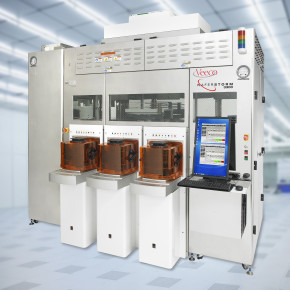
Skywater Technology Foundry selects Veeco´s Waferstorm for 3D Monolithic SoC development


PLAINVIEW, N.Y., Feb. 28, 2019—Veeco Instruments Inc. (NASDAQ: VECO) today announced that SkyWater Technology Foundry has taken delivery of the WaferStorm® single wafer wet process system to support advanced development work for the design and fabrication of next-generation 3D monolithic System-on-a-Chip (3DSoC) technology. One of the most advanced U.S.-based semiconductor technology foundries, SkyWater is leveraging the process performance and production capabilities of the WaferStorm to create densely integrated logic and memory products. Using breakthrough 3DSoC technology, the foundry is collaborating with researchers at the Massachusetts Institute of Technology (MIT) to set a new threshold for device performance and energy efficiency.

 
“Our selection of the WaferStorm system was based on Veeco’s track record of delivering best-in-class technology for wet processing that enables many leading-edge applications,” stated Thomas Sonderman, president of SkyWater. “The solvent-based platform offers a precise level of control during wafer processing, which is essential to the innovations we are working on with MIT to develop technology that drives better performing devices at lower cost.”

WaferStorm’s unique ImmJET™ solvent technology provides customers with the best overall process performance, flexibility and production capability in its class compared to conventional batch or spray-only approaches. WaferStorm offers proven, reliable solutions for metal lift-off (MLO), photoresist strip, dry film resist strip, via cleans, flux removal and other advanced packaging processes. WaferStorm is also the production tool of record for MLO at several leading vertical-cavity surface-emitting laser (VCSEL) manufacturers today.

“SkyWater’s selection of the WaferStorm further showcases Veeco’s leadership in advanced wet processing technology, and we’re pleased to be working with the renowned foundry that is driving true innovation in the 3DSoC space,” said Scott Kroeger, general manager of Veeco’s Precision Surface Processing business unit. “Our full suite of solvent, clean and etch technologies is ideally suited to help create a new class of microelectronic devices and systems that extends beyond previous thresholds for performance and efficiency.” As reported by IEEE, advances in monolithic 3D integration lay the foundation for highly efficient next-generation computing systems. With the emergence of artificial intelligence, edge computing and deep learning driving innovation in memory access as a key enabler for future systems design, the use of 3DSoC represents a paradigm shift for the computer industry and high-tech world. As the industry reaches the next-generation of 3DSoC technology, WaferStorm delivers excellent process results at the lowest cost of ownership, enabling innovators like SkyWater and MIT to advance research and enhance device performance.

Matheson Acquires HyCO Business from Linde


MATHESON, a wholly owned subsidiary of TNSC Group, has completed its acquisition of the divested Linde HyCO business in the United States that became available as a result of the global business combination of Linde and Praxair. The United States Federal Trade Commission approved MATHESON as the buyer of the divested HyCO business on February 27, 2019.

HyCO is an industry term covering the production of hydrogen, carbon monoxide, or syngas, which is a mixture of hydrogen, carbon monoxide and carbon dioxide.
 
Source : 4-traders LINK

Thursday, February 28, 2019

Germany's Merck makes $5.9 billion counterbid for Versum Materials

FRANKFURT (Reuters) - German drugs and lab supplies maker Merck KGaA offered $5.9 billion, including debt, for Versum Materials, in a cash deal that tops an offer from U.S. rival Entegris, as both seek to boost their electrochemicals operations.

Source: Reuters (LINK


Saturday, February 23, 2019

SK Hynix plans to spend $107 billion building four memory chip plants

SK Hynix's plans for the factories, producing DRAM and next-generation chips, come as chipmakers prepare for a surge in demand to power new technology such as 5G and artificial intelligence. 

Source: CNBC (LINK)

Intels embedded STT-MRAM ready for manufacturing using 22 nm FinFET process

Intel says embedded spin-transfer torque (STT)-MRAM on its 22 nm FFL process is ready for high-volume manufacturing. Embedded MRAM is considered a promising technology for applications such as internet of things (IoT) devices. In a paper presented at the International Solid-State Circuits Conference on Tuesday, Intel said that it has used a “write-verify-write” scheme and a two-stage current sensing technique to create 7-Mb perpendicular STT-MRAM arrays in its 22FFL FinFET process. The embedded MRAM technology achieves 10-year retention at 200 °C and endurance of more than 10^6 switching cycles. The arrays have demonstrated write endurance of more than 1E06 cycles and read disturb error rate of more than 1E12 cycles. 

In a separate ISSCC paper presented Tuesday, Intel also described the development of resistive RAM (ReRAM) as a low-cost option for embedded non-volatile memory for SoCs used in IoT and automotive. The embedded ReRAM technology — also implemented in a 22-nm FinFET process — demonstrate what the company says is the smallest and highest-density ReRAM subarray and material innovations to allow low-voltage switching without impact to transistor reliability. 

Source: EETimies (LINK)
By Abhiskekumar Thakur


TSMC is expected to secure the first 5nm chip orders from Apple for the 2020 iPhones using EUV

TSMC is expected to secure the first 5nm chip orders from Apple for the 2020 iPhones. TSMC has obtained 7nm chip orders for 5G related applications including HPC and IoT from AMD, Nvidia, Xilinx, NXP, OmniVision and TI. 

Source: DigiTimes (LINK)
By Abhishekkumar Thakur


Thursday, February 21, 2019

ASM International N.V. today reports its fourth quarter 2018 operating results

ASM International N.V. (Euronext Amsterdam: ASM) today reports its fourth quarter 2018 operating results (unaudited) in accordance with IFRS. (LINK)

  • New orders received of €302 million, at the highest level in history, increased 17% compared to Q3 2018 and were 48% higher compared to Q4 of last year.
  • Net sales for the fourth quarter 2018 were €255 million, at the highest level in history, an increase of 30% compared to the previous quarter and an increase of 40% compared to Q4 last year.
  • Gross profit margin was 41.7% in Q4 2018 compared to 40.9% in the previous quarter and 39.6% in Q4 of last year.
  • Operating result increased to €46 million compared to the previous quarter. The increase is mainly the result of the higher sales level.
  • Normalized net earnings for the fourth quarter 2018 increased by €4 million compared to Q3 2018.

COMMENT

Commenting on the results, Chuck del Prado, President and Chief Executive Officer of ASM International, said:

"In Q4 we realized sales of €255 million and an order intake of €302 million. Sales were slightly above our guidance of €220-250 million. Our order intake was substantially above the €240-260 million that we indicated earlier, and again substantially higher than our former record level. The high order intake is driven by logic, foundry and then memory and was impacted by pull-ins of orders originally expected in the first half of 2019. As a consequence, and in line with our earlier 2018 guidance, we have seen a much stronger second half than first half. This reflects our strong position in the logic/foundry market, which, as compared to the memory market, showed a healthy development in the second half of 2018. Due to this we will start 2019 with a high order book. We delivered on our goal to outgrow the wafer fab equipment (WFE) market in 2018 by growing our sales year-over-year with 17% on a US$ basis." 
 

OUTLOOK

For Q1, on a currency comparable level, we expect sales of €225-245 million, while we expect sales in Q2 to be at the €200-230 million level. For Q1, on a currency comparable level, bookings are expected in the range of €200-220 million.

For 2019, general expectations are that the wafer fab equipment (WFE) market will decline with a mid to high teens percentage. Based upon this current market view, we expect to outperform the WFE market in 2019.

Wednesday, February 13, 2019

The new ASM XP8 QCM up to 16 chamber ALD/CVD tool

Here is a photo out of a Korean web page of the new massive ASM XP8 QCM. Q stands for quad meaning the central wafer vacuum handler can dock 4 chambers per slot or "just" two as earlier on the XP8 up to 16 chamber ALD/CVD tool [LINK].

ASM International enhances ALD productivity with new 300 mm XP8 Quad Chamber Module [LINK]


Tuesday, February 12, 2019

Behold the final Program for EFDS ALD for Industry, Berlin 19-20 March

Ladies and Gentlemen, behold the final Program for EFDS ALD for Industry, Berlin 19-20 March. 2 intensive days with a great show! 

Program_ALD

Sunday, February 10, 2019

Update on China Fab expansion

China has the most fab projects in the world, with 30 new facilities or lines in construction or on the drawing board, according to data from SEMI’s World Fab Forecast Report. Of those, 13 fabs are targeted for the foundry market, according to SEMI. The remaining facilities are geared toward LEDs, memory and other technologies.As before, China’s foundry industry is split into two categories—multinational and domestic vendors.

Until recently, both groups used older technology. But Taiwan-based TSMC recently moved into 16nm finFET production in China, while SMIC this year hopes to become the first domestic foundry to enter the 14nm finFET race. SMIC’s move would put it on par with some of its foreign rivals. In addition, SMIC has obtained $10 billion in funding to develop 10nm and 7nm. There are a number of major foundry events in China. Here’s the latest:
  • TSMC will expand its 16nm finFET production in a new China fab with possible plans to build another plant.
  • UMC plans to expand its 200mm capacity in China, and continues to produce 40nm and 28nm in a 300mm fab.
  • GlobalFoundries and TowerJazz are building fabs in China.
  • The latest possible entry is Taiwan’s Foxconn, which plans to build a fab for captive and foundry purposes, according to reports.
  • On the domestic front, SMIC and Shanghai Huali are eyeing 14nm. Plus, several domestic vendors are expanding their 200mm and 300mm capacities.
In 2018, China produced 15.3% of the world’s chips, up from 12.6% in 2013, according to IC Insights.Citing a slowdown in memory and other factors, chip sales in China are expected to grow by only 3% in 2019, compared to 21% growth in 2018, according to IC Insights. In total, the worldwide chip market will grow by 2% this year, the firm noted.

Pure-play foundry sales in China reached $10.69 billion in 2018, up 41% over 2017, according to IC Insights. In 2019, though, foundry sales in China are expected to slow to about 10%.

As of the end of 2018, the installed foundry capacity of 1.3 million wpm in 200mm equivalents is reported in China. Worldwide is about 7 million wpm. This includes IDM foundry capacity.The figures include both 200mm and 300mm fabs. In total, there are six 200mm facilities in the works in China, according to Dieseldorff.Last year, SEMI reduced its projections for fab equipment spending in China for 2019, from $17 billion to roughly $12 billion. So, in 2019, fab equipment spending in China is expected to reach $11.96 billion, down 2% over 2018, according to SEMI.

SK Hynix will invest more this year in China compared to Samsung. This is because they have a new fab in Wuxi.
TSMC makes chips for the cryptocurrency systems firms in China and elsewhere. Now, the company is suffering from the bust in Bitcoin. In its fourth-quarter results, TSMC posted mixed results with a weak outlook due to a slowdown in smartphones and cryptocurrency. It’s unclear if this will impact TSMC’s fab plans in China. For years, the company has operated a 200mm fab in Shanghai. Last year, TSMC began ramping up 16nm finFETs in a new fab in Nanjing. The 300mm fab is producing 10,000 wpm with plans to move to 20,000 wpm by year’s end.TSMC’s Nanjing fab is in the first phase with three other phases in the works. Originally, the company planned to move 7nm into a proposed second fab in Nanjing at some point, according to sources. Now, TSMC is rethinking its plans, targeting 16nm or 12nm for the second phase, sources added.UMC has been producing chips in a 200mm fab in Suzhou for several years. UMC plans to expand this fab amid a worldwide shortage of 200mm capacity. Meanwhile, in 2017, UMC moved into production in a 300mm fab venture in Xiamen. The fab is ramping up 40nm and 28nm. Meanwhile, GlobalFoundries is building a 300mm fab in Chengdu. Previously, the goal was to develop 180nm/130nm processes in the fab. Last year, though, the company changed its plans, targeting the fab for its 22nm FD-SOI technology, dubbed FDX. It has not provided a timeline for the completion of the fab. In addition, contract manufacturing giant Foxconn is in talks to build a 300mm fab in Zhuhai, according to reports. The fab, a joint venture between Foxconn and Sharp, would be used for both captive and foundry purposes. Foxconn has yet to make an official announcement.China also has more than a half-dozen domestic foundry vendors. SMIC is the largest one. The Huahong Group is another foundry player in China. Other vendors include ASMC and CSMC.

2019 is a major test for SMIC, the most advanced domestic foundry in China. SMIC’s most advanced technology is 28nm, although it has been struggling with its yields in this arena.China is behind in process technology. So in 2015, SMIC, Huawei, Imec and Qualcomm formed a joint R&D chip technology venture in China with plans to develop 14nm finFETs by 2020.SMIC is getting $10 billion to build capacity for 14nm, 10nm and 7nm. They will have capacity for 70,000 wafers a month by Q4 in 2021.Besides SMIC, meanwhile, the Huahong Group is also a player in China. HHGrace and Hua Hong Semiconductor, two foundry vendors within this group, provide 200mm foundry services. Hua Hong also is building a new 300mm fab for mature processes in Wuxi.

Shanghai Huali, another member of the Huahong Group, has a new 300mm fab in the works with plans to ramp up 28nm. At some point, the company is targeting 14nm.

One of the newer foundry players is CanSemi Technology, which is building a 300mm fab in Guangzhou.

---------------------------------
Sumirized by Abhishekkumar Thakur
Source : "China’s Foundry Biz Takes Big Leap Forward" Semiconductor Engineering (LINK)

Fraunhofer Institute for Telecommunications to Receive Veeco’s SPECTOR® Ion Beam Sputtering System with Enhanced Sirius™ Optical Monitoring System


Plainview, N.Y., Feb. 5, 2019 – Veeco Instruments Inc. (Nasdaq: VECO) announced today that it has shipped its SPECTOR® Ion Beam Sputtering (IBS) system and the Sirius™ Optical Monitor System (OMS) to Fraunhofer Institute for Telecommunications. Fraunhofer, based in Berlin, will use Veeco’s IBS technology to develop and produce laser facet coatings and other micro-optical devices.

“The development of sophisticated micro-optical devices requires exceptional sputtering technology,” said Ms. Greta Ropers, head of backend and packaging group for Fraunhofer. “Veeco’s SPECTOR system, coupled with the Sirius OMS, ensures we are developing and producing world-class devices with the highest throughput and process repeatability on an automated, proven platform.”

According to customers, the SPECTOR platform generates the highest quality optical thin films with improved levels of productivity and throughput. Unlike evaporative coatings, ion beam sputtered thin films are deposited at high energies, giving exceptional thickness control and low defect densities for laser coating applications. Veeco’s Sirius OMS significantly enhances the SPECTOR platform capability by coupling cutting edge broadband monitoring control with the inherent stability of ion beam deposited films.

“Fraunhofer Institute for Telecommunications is a recognized worldwide leader in developing next generation laser facet coatings and micro-optical devices,” said Adrian Devasahayam, Ph.D., vice president and general manager of Veeco’s Advanced Deposition and Etch (AD&E) business. “The SPECTOR system sets the standard for precision optical coating thin films by providing unparalleled quality and flexibility that will no doubt accelerate their development goals.”

Funding for this project was granted by Forschungsfabrik Mikroelektronik, a cross-location research factory for microelectronics and nanoelectronics compromised of eleven institutes within the Fraunhofer Group along with the IHP GmbH - Innovations for High Performance Microelectronics and the Ferdinand-Braun-Institut, Leibniz-Institut für Höchstfrequenztechnik. For more information, please visit https://www.forschungsfabrik-mikroelektronik.de/en.html. The system was sold in cooperation with Veeco’s European channel partner, veonis Technologies GmbH.

Veeco is exhibiting at Photonics West (Feb. 5-7, San Francisco) and encourages attendees to visit Booth #3202 to learn more. Technical experts will discuss latest innovations in optical coating technology for industrial, defense, medical and telecom applications and MOCVD solutions for 3D sensing, LiDAR and datacom applications.


Sunday, January 27, 2019

Semiconductor Unit Shipments Exceeded 1 Trillion Devices in 2018

According to SemiWiki citing IC Insights McClean Report [LINK], the Semiconductor units forecast to increase 7% in 2019 with IC units rising 8%, O-S-D units growing 7%. Annual semiconductor unit shipments, including integrated circuits and optoelectronics, sensors, and discrete (O-S-D) devices grew 10% in 2018 and surpassed the one trillion unit mark for the first time.


Friday, January 25, 2019

Oxford Instruments Partners ITRI for Micro LED Development with Plasma Etch Solutions

[LED Inside, LINK] Oxford Instruments Plasma Technology (OIPT) announced that it has worked with Taiwan’s Industrial Technology Research Institute (ITRI) by providing multiple PlasmaPro 100 systems including both etch and deposition for ITRI’s Micro LED R&D program.


The PlasmaPro 100 ICP process solutions are designed to support leading edge device applications such as Lasers, RF, Power and advanced LEDs.

Thursday, January 24, 2019

Volkswagen invests USD 10 M in US ALD start-up Forge Nano for battery material research

The Volkswagen Group is investing US$10 million in the start-up Forge Nano Inc with a view to reinforcing its specialist knowledge in the field of battery research. Forge Nano is investigating a material coating technology that could further improve the performance of battery materials. As a partner, Volkswagen will provide support for industrial trials of this technology. The transaction is still subject to approval by the authorities. 

(forgenano.com)

Volkswagen has been collaborating with Forge Nano on advanced battery material research since 2014. The startup with headquarters in Louisville, Colorado, is investigating processes for scaling atomic layer deposition (ALD) to create new core-shell materials, especially for battery applications. ALD is a chemical process for applying atomic scale coatings one atom at a time. With its specific ALD technology, Forge Nano aims to boost energy density of vehicle battery cells.
For example, a higher energy density would have positive effects on the range of electric vehicles. Volkswagen has been lending their automotive and battery expertise towards Forge Nano’s applied research efforts.

The Volkswagen Group is consistently forging ahead with its electric offensive and intends to offer more than 50 battery-electric models by 2025, accounting for about a fifth of its entire model portfolio. To safeguard this approach, Volkswagen is cooperating with strategic battery cell suppliers and developing its own specialist know-how in battery research. This also includes targeted venture investments. Volkswagen is increasingly investing in international start-ups to bring innovative technologies forward to production maturity together.

Dr. Axel Heinrich, Head of Volkswagen Group Research, said: “At Volkswagen, we want to be the world’s leading provider of e-mobility. We are continually expanding the battery technology know-how required for this purpose. We need to safeguard our technological competence for the future. Cooperation with start-ups is a key element in these efforts. We are acting as a partner to Forge Nano and intend to provide the team with opportunities to carry out industrial trials with its innovative technology.”

Dr. Paul Lichty, Founder and CEO of Forge Nano, said: “Our atomically precise surface engineering technology is ushering in a new era of high performance materials. We are excited to partner with a company that has such a strong commitment to commercializing innovation.”

Wednesday, January 23, 2019

Intel is planning to break ground on a major 7nm manufacturing expansion at D1X fab

The Oregonian reports (LINK) that Intel is planning to break ground on a major 7nm manufacturing expansion at D1X fab. The new fab space would reportedly be the same size as the first two phases of the plant, at 1.1 million square feet. Intel has instructed its contractors to expect an 18-month contract cycle, followed by several months of additional equipment installation. 
If accurate, this suggests a fairly significant capacity build-out. Given the timelines under discussion and the bring-up time associated with firing up a new fab, a mid-2019 announcement with a 24-30 month timeline from breaking ground to full production would put EUV rolling out at Intel by mid-2021 or early 2022. Just remember that Intel doesn’t necessarily need to launch EUV from D1X, which means we could see an earlier introduction if the technology tips up from a different fab first.

----------
By Abhishekkumar Thakur

ASM International enhances ALD productivity with new 300 mm XP8 Quad Chamber Module

ASM International enhances ALD productivity with new very competetive 300 mm XP8 Quad Chamber Module providing:
  • High productivity platform for PEALD and PECVD Processing of up to 16 wafers at a time.
  • Integrated processing using both the "old" Double (DCM) and new Quad Chamber Modules (QCM) for flexibility and productivity optimization.
  • Earlier in 2018 ASM relaunched the two industry ALD workhorse chambers, Pulsar Thermal ALD and Emerald PEALD used for e.g. HKMG,  as Double module on XP8 - this now means that all ASM ALD and PEALD chambers can be used on the high productivity platfrom XP8 eilter sa DCM or QCM or both.
[ASM News, LINK] ASM International N.V. (Euronext Amsterdam: ASM) today introduced its XP8 QCM tool for high-productivity 300mm single-wafer plasma enhanced atomic layer deposition (PEALD) and plasma enhanced chemical vapor deposition (PECVD) applications. The QCM, or Quad Chamber Module, is a process module with four tightly integrated process reactors. Up to four QCM modules can be configured to each XP8 platform, enabling processing of up to 16 wafers at a time. 
Quad chamber modules (QCMs) 30, 32, 34, and 36 are connected to four side surfaces of the vacuum chamber 22. Each QCM is a module having four reactor chambers (RC1 to RC4). Processing such as plasma film forming processing is performed on a substrate in each reactor chamber. (ASM Patent application US20170278074A1)
"Across the board, customers are requiring increased throughput" said Tominori Yoshida, ASM's General Manager and Senior Vice President, Plasma Products Business Unit. "The XP8 QCM addresses advanced PEALD and PECVD films including silicon oxide for multiple patterning and silicon nitride for other applications, and relatively thick films where the tool's architecture enables higher throughput compared to other single-wafer configurations."

The new reactor architecture is well-suited for high-volume advanced-node memory and logic applications, which require the precise film control provided by the QCM's innovative reaction chamber. The QCM chambers use the same advanced reactor technology as ASM's original PEALD and PECVD XP8 Dual Chamber Modules (DCMs). Hundreds of these DCMs have been running for years in high-volume production globally at key logic, foundry and memory customers. This allows customers to easily transfer existing processes to the new QCM chamber. As a result, the XP8 QCM tool is already in high-volume manufacturing at multiple customers worldwide.

Furthermore, the XP8 architecture enables integrated processing using both DCMs and QCMs for flexibility and productivity optimization.

Friday, January 18, 2019

AIXTRON Provides Its Systems to Support San'an Optoelectronics' Expansion of ROY LED production


AIXTRON announced that the company will supply multiple AIX 2800G4-TM (IC2) cluster systems to San'an Optoelectronics. The Chinese chipmaker with its long-term plan for the rising market demands for fine pitch displays requires a capacity increase in red, orange and yellow LEDs (ROY LEDs). AIXTRON's AIX 2800G4-TM (IC2) tools will feature a configuration of 15x4 inches and are scheduled for shipment between 4Q18 and 2Q19. 
Source: Aixtron LINK


AIXTRON's automated Planetary Reactor® platform has been established as the tool of reference for arsenide-phosphide-based ROY LEDs due to its unique production performance and high manufacturing capacity (AIX 2800G4-TM system).

Wednesday, January 16, 2019

Come to Berlin for the EFDS ALD for Industry - 3rd Workshop and Tutorial, March 19-20, 2019

Including Industrial Exhibition and Practical ALD Show

A topical workshop with focus on industrialization and commercialization of ALD for current and emerging market

Atomic Layer Deposition (ALD) is used to deposit ultraconformal thin films with sub-nm film thickness control. The method is unique in the sense that it employs sequential self-limiting surface reactions for growth in the monolayer thickness regime. Today, ALD is a key technology in leading semiconductor technology and the field of application in other leading-edge industries is increasing rapidly. According to market estimates the equipment market alone is currently at an annual revenue of US$ 1.5-1.7 billion (2017) and it is expected to double in the next 4-5 years.

In a European context ALD was invented independently twice in Europe (Russia & Finland) and since the last 15 years Germany has grown to become one of the strongest European markets for ALD in R&D, chemicals, equipment and end users.

The Event will focus on the current markets for ALD and addresses the applications in semiconductor industry, MEMS & Sensors, Battery Technology, Medical, Display, Lightning, Barriers and Photovoltaics.

Sunday, January 13, 2019

AIXTRON Provides Its AIX G5+ C to PlayNitride for Micro LED Production

AIXTRON announced that it has signed a Joint Collaboration Agreement with PlayNitride to accelerate technical and commercial breakthroughs of Micro LED. AIXTRON’s AIX G5+ C MOCVD system will be adopted by PlayNitride for the manufacturing of GaN-based (gallium nitride) Micro LEDs.

PlayNitride has presented Micro LED displays with high resolution and supplied its Micro LED chips to Samsung for the 75-inch Micro LED display demonstrated at CES 2019. By signing a joint collaboration agreement, AIXTRON and PlayNitride will join forces to technically and commercially enable the decisive step forward to unlock the potential markets.
 

Source: LEDinside LINK

Cree and STMicroelectronics Announce Multi-Year Silicon Carbide Wafer Supply Agreement


Cree, Inc. announces that it signed a multi-year agreement to produce and supply its Wolfspeed® silicon carbide (SiC) wafers to STMicroelectronics, a global semiconductor leader serving customers across the spectrum of electronics applications. The agreement governs the supply of a quarter billion dollars of Cree’s advanced 150mm silicon carbide bare and epitaxial wafers to STMicroelectronics during this period of extraordinary growth and demand for silicon carbide power devices.
 
Source: AZoSensorsLINK

AMD shows off 7nm next-gen chips at CES, aims at Intel and Nvidia

Advanced Micro Devices Inc on Wednesday unveiled its next generation smaller and power-efficient computer chip and a graphics processor, aiming at bigger rivals Intel Corp and Nvidia Corp.

 Source: Retuters LINK


Thursday, January 10, 2019

KLA-Tencor Corporation to Change Name to KLA Corporation to Represent the Company's Broader Scope and Optimistic Vision

MILPITAS, Calif., [Jan. 10, 2019] -- KLA-Tencor Corporation (NASDAQ: KLAC), the leading provider of advanced process control solutions, today announced that it will be changing its name to KLA Corporation. At the same time, the company is rebranding and adopting the tagline Keep Looking Ahead™, to indicate KLA’s optimistic view of technology’s impact on the world. 
 
“Our old name and identity have served us well since KLA and Tencor merged in 1997,” said Rick Wallace, president and CEO of KLA. “Our new, simplified name and more contemporary identity will better reflect and more effectively communicate our vision of the future to new employees and new customers—while retaining the strength of our industry-leading brand. Our new brand is designed to signify our confidence in technology’s ability to drive positive change in the world, lifting global society through many avenues including IoT, AI, and other technologies that connect us. KLA’s products and solutions play a key role in enabling these devices and experiences.” 

Leading Provider of Semiconductor Manufacturing Services Selects Veeco's AP300 to Support Aggressive Advanced Packaging Expansion

World’s Largest OSAT Provider Names AP300™ Its Preferred Lithography System Due to Veeco’s Industry-Leading Uptime and Process Performance

PLAINVIEW, New York, Jan. 8, 2019 — Veeco Instruments Inc. (Nasdaq: VECO) announced today that the world’s largest outsourced assembly and test (OSAT) provider has purchased multiple Veeco AP300™ lithography systems. Complementing the OSAT’s previously installed Veeco tools, the AP300 was selected based on its industry-leading uptime and performance with lower total cost of ownership (CoO). This purchase is illustrative of continued strong market demand for Veeco’s lithography systems, given the tools’ ability to handle next-generation advanced packaging process needs including copper (Cu) pillar, wafer-level packaging (WLP), fan-out WLP (FOWLP) and 3D integrated circuit developments.

The AP300 lithography stepper’s winning combination of overlay, resolution, sidewall profile performance and broadband flexibility enables highly automated, cost-effective manufacturing valued by foundries and OSATs for applications such as fan-in WLP, FOWLP, through-silicon via, silicon interposer solder and Cu pillar bumping. Given the strong market growth expected in mobile, IoT and artificial intelligence (AI) applications, OSATs seek to ensure they are competitively positioned to drive customer acquisition and retention. According to Yole, the equipment and materials market for FOWLP alone will expand at a compound annual growth rate (CAGR) of 43 percent to reach $694 million by 2021.

“Increased mobility, IoT, AI and deep learning are seeing strong growth in step with global megatrends, all of which are enabled by technologies like 3D integration and advanced packaging,” noted Peter Porshnev, Ph.D., senior vice president and general manager of Veeco’s Ultratech business unit. “As we grow our customer base, Veeco’s experienced team of technologists continues to work closely with OSATs and foundries to deliver industry-leading innovations that directly address their performance, yield and CoO challenges.”

About Veeco

Veeco (NASDAQ: VECO) is a leading manufacturer of innovative semiconductor process equipment. Our proven MOCVD, lithography, laser annealing, ion beam and single wafer etch and clean technologies play an integral role in producing LEDs for solid-state lighting and displays, and in the fabrication of advanced semiconductor devices. With equipment designed to maximize performance, yield and cost of ownership, Veeco holds technology leadership positions in all these served markets. To learn more about Veeco's innovative equipment and services, visit www.veeco.com.

Sunday, January 6, 2019

Versum Materials report 1,000 CHEMGUARD® GEN III Systems sold

[Versum Materials Newsletter, LINK] An important milestone for the Versum Materials DS&S was realized recently with the sale and commissioning of the onethousandth (1,000) CHEMGUARD® Gen III high-purity, liquid delivery system since its introduction in 2016. The 1,000-plus units are now running in the latest high-volume semiconductor fabs globally with more than 200 molecules now approved for delivery. Built on a legacy of more than 30 years of supplying advanced materials and delivery systems to the worldwide semiconductor and electronics industries, Versum Material’s DS&S team continues to design and build safer, more reliable delivery equipment for high-purity gas and liquid distribution.
 
 
CHEMGUARD 500 is specifically designed for very low vapor pressure precursors. The patented, automa􀆟c solvent purge ensures molecule purity on some of the lowest vapor pressure molecules used in semiconductor manufacturing. A small sample of the molecules approved in a CG500 are: TDMAT, TDEAT, TAETO, TBTDET, TDEAH, TEMAH, TEMAHf, TEMAZr and TPOSL. (From the CHEMGUARD GEN III 500 DATA SHEET)

“The CHEMGUARD Gen III system has been very well received by Versum Materials major customers, especially with its built-in redundancies,” said Jeff Chung, DS&S Asia Sales Manager.

Nvidia may manufacture its 2020 GPUs using Samsung’s 7nm EUV process

According to a new report from a Japanese news source, Nvidia will manufacture its 2020 GPUs using Samsung’s 7nm EUV process. Nvidia is currently using TSMC’s 12nm process for its latest GPU cards. 
In a previous report by DigiTimes, Nvidia was rumored to use TSMC’s non-EUV 7nm process for its cards in 2019, but that may no longer be the case if Nvidia plans to use Samsung’s 7nm EUV process in 2020. It’s possible Nvidia could use TSMC’s 7nm process in 2019 for some of its products and Samsung’s 7nm EUV for others in 2020, but that may not make too much practical sense, as it would make its product line-up complicated to design.

Source: Tom´s Hardware  LINK
 -----------
By Abhishekkumar Thakur

Saturday, January 5, 2019

2018 Semiconductor Year in Review by Scotten Jones

Scotten Jones, IC Knowledge. has recently summarized 2018 in an article at SemiWiki. Reportedly, after six years of single digit percentage growth in the overall semiconductor market, 2017 saw almost 22% growth and 2018 year-to-date is up roughly 17% (based on numbers published by the world semiconductor trade statistics). 
The big growth driver the last two years has been surging memory prices driven by high bit demand and tight supply. With additional memory capacity coming on-line, memory supply is expected to ease in 2019 removing the biggest driver of growth. 
Apart from that leading edge logic goes down to three foundries, 10nm process delays at Intel, EUV's entry in the production, 3D NAND growth and DRAM scaling slowdown have become the influencing factors in industry's growth. 
"In spite of slower growth expected for 2019 the industry continues to move forward on technology scaling across all three major product segments. The long term outlook for the semiconductor market and underlying technologies remains strong."

Source: SemiWiki "2018 Semiconductor Year in Review" by Scotten Jones LINK

----------
By Abhishekkumar Thakur

South Korea continues bold investments in memory sector


South Korea is a global semiconductor powerhouse, with semiconductor output recording an increasing ratio of its total annual exports, surging from 12.6% in 2016 to 17.1% in 2017, and further to 21.2% in the first 11 months of 2018. The significant growth momentum has largely resulted from constant heavy investments by major players Samsung Electronics and SK Hynix in memory solutions development, technology upgrades and capacity expansions, as well as in foundry and even packaging process advancement.

In its latest major investment project, Samsung is building its second semiconductor plant in Pyeongtaek at a total cost of US$27.7 billion to make 3D NAND flash and DRAM, with investment and production scales double those of its first plant in the Korean city. After completion by mid-2019 with official run slated for the second half of the year, the new plant will have monthly capacity of 130,000 wafers for DRAM alone.

Continue reading: DIGITIMES LINK

Friday, January 4, 2019

Nanexas PharmaShell® patent approved in the United States

The US Patent Office has approved Nanexa's patent application for the PharmaShell® drug delivery platform.

Nanexa AB is a nanotechnology drug delivery company focusing on the development of PharmaShell®, which is a new and groundbreaking drug delivery system that is expected to have great potential in a number of medical indications. Within the framework of PharmaShell®, Nanexa has partnership agreements with among others, AstraZeneca.

The US Patent Office has approved Nanexa's patent application on January 1, 2019. The now-approved patent covers the product PharmaShell® as well as the method of its manufacture and formulation of PharmaShell® coated drugs. The approved patent has patent number US 10166198.
 

CEO David Westberg comments:

It is with great satisfaction that I can now conclude that the PharmaShell® patent is approved in the United States. We have always felt secure in our patent situation, but it still means a lot to get it confirmed by the US Patent Office. The US is our largest market and now that we have an approved patent, we can have a more interesting position in discussions with potential partners.

Source : Nanexa (in Swedish, LINK)

Wednesday, January 2, 2019

ASM International received a supplier excellence award from TSMC

[ASM International, LINK] ASM International N.V. (Euronext Amsterdam: ASM) has received a supplier excellence award as one of five equipment suppliers from TSMC for the performance and support of ASM's CVD equipment and technology during 2018. The award was presented to ASM by Dr. C.C. Wei, TSMC's Chief Executive Officer, at the TSMC Supply Chain Management Forum on December 6, 2018 in Taiwan.

The award was received by ASM in recognition of its CVD technology and performance in production at TSMC fabs. During the presentation, TSMC explained three points that contributed to the award to ASM.

1) Close engagement with TSMC and precursor suppliers to innovate process solutions.

2) Continued effort on cost and productivity improvement.

3) Exceptional manpower arrangement for delivery.


"We are very honored to receive this prestigious award from TSMC. On behalf of ASM, I would like to thank TSMC for this recognition," said Chuck del Prado, CEO and President of ASM International. "ASM strives to continuously advance our technology solutions and our partnership with TSMC is of strategic importance to ASM. We are very pleased that TSMC has benefited from the performance of our ALD and Epitaxy deposition tools in its production fabs."

TSMC is the world's largest semiconductor manufacturing foundry. TSMC holds the Supply Chain Management Forum annually to show appreciation for the support and contributions of their suppliers and to recognize outstanding equipment and materials suppliers.

BluGlass enters collaboration with global equipment leader, AIXTRON SE


Australian technology innovator, BluGlass Limited (ASX: BLG) has today announced that it will collaborate with global semiconductor equipment leader, AIXTRON SE (FSE: AIXA), to evaluate BluGlass’ unique remote plasma chemical vapour deposition (RPCVD) technology.

BluGlass has selected the AIX 2800G4-HT system for the scaling of RPCVD to mass production capacities. AIXTRON’s Planetary Reactor® delivers class leading semiconductor film uniformity due to its proprietary dual axis of wafer rotation during deposition. RPCVD technology enables low temperature deposition of III-V nitrides which could potentially improve the performance of devices. The first integration of RPCVD onto the AIX 2800G4-HT will be conducted at BluGlass’ Silverwater facility in Sydney, Australia.

BluGlass’ Managing Director Giles Bourne said today, “We are very pleased to have the support from AIXTRON for this major scaling project of our technology. This is an important step towards demonstrating the commercial viability of RPCVD in large scale manufacturing.”

AIXTRON’s Group Innovation Officer, Dr Ken Teo, adds, “At AIXTRON, we are constantly striving to bring novel technologies onto our platforms in order to provide our customers with advanced capabilities. We want to explore the potential of RPCVD technology for low temperature deposition of nitride layers which may open up new possibilities for opto/electronic devices; we look forward to working with BluGlass in integrating RPCVD and evaluating the technology”.
 
Source: BlueGlass LINK

Saturday, December 29, 2018

Huawei Kirin 990 to be the first prodcut to use TSMC 7nm EUV process

Huawei has become the second-largest client of TSMC and can be the first company adopting the pure-play foundry’s N7+ extreme ultraviolet (EUV) process node manufacturing, likely via the Kirin 990. 
 
Source: Kirin 990 To Be the First Customer to Use a TSMC Process Using EUV LINK
 
-------------
By Abhishekkumar Thakur 


Tuesday, December 25, 2018

Intel to get 700 million shekel grant for Israel expansion

Israel will give Intel Corp a 700 million shekel ($185 million) grant in return for a planned $5 billion expansion of its production operations in Israel.

Source: Reuters http://feeds.reuters.com/~r/reuters/businessNews/~3/yEH28mfWrVw/intel-to-get-700-million-shekel-grant-for-israel-expansion-idUSKCN1OO0JD

Monday, December 24, 2018

TRUMPF acquiring VCSEL laser diode maker Philips Photonics

 
TRUMPF GmbH of Ditzingen, near Stuttgart, Germany is acquiring Philips Photonics GmbH of Ulm, Germany, a wholly owned business of Royal Philips of Eindhoven, The Netherlands that provides vertical-cavity surface-emitting laser (VCSEL) technology for datacom, consumer and industrial applications.
 
Established in 2000 as ULM Photonics GmbH and acquired by Philips in 2006, Philips Photonics in November announced its third production capacity expansion in the last three years (to be completed within the next 18 months).

With about 13,400 employees, TRUMPF makes machine tools, laser technology and electronics for industrial manufacturing. The firm says that the acquisition opens up a new market segment for it in addition to its existing business with high-power diode lasers as well as expanding its product portfolio. Employing about 280 people, laser diodes from Philips Photonics are used in, for example, smartphones, digital data transmission, and sensors for autonomous driving. As well as its manufacturing facility in Ulm, Philips Photonics also has sites in Aachen, Germany, Eindhoven in The Netherlands, and sales offices in Shenzhen, Shanghai and Qingdao in China.

“We want to open up new product fields and expand our existing portfolio at a strategically important point,” says TRUMPF’s CEO Nicola Leibinger-Kammüller. Through the acquisition, the firm should expand its access to fast-growing markets in the photonics and digital products sectors.

“Philips Photonics employs a large number of very good developers who have opened up new areas of photonics and who will strengthen our research and development area in the long term,” comments chief financial officer Lars Grünert, member of the group’s management board responsible for the new TRUMPF product sector. “Together, we want to further develop the Photonics division.” In its past fiscal year 2017/18, TRUMPF has invested €337m in R&D (a development ratio of 9.5%).

“Since our foundation in 2000, we have grown strongly. More than half a billion cell phones worldwide are equipped with laser diode technology from Philips Photonics,” notes Philips Photonics business leader Joseph Pankert. Becoming part of TRUMPF “will ensure that the division can continue to grow in a highly innovative company in the future,” he adds.

The acquisition is expected to be completed in second-quarter 2019. Authorities still have to approve the acquisition.

Thursday, December 20, 2018

IBM announcagreement with Samsung to manufacture 7nm microprocessors for IBM

Following Globalfoundries desission to stop at 14nm, IBM today announced an agreement with Samsung to manufacture 7nm microprocessors for IBM Power Systems™, IBM Z™ and LinuxONE™, high-performance computing (HPC) systems, and cloud offerings.The agreement combines Samsung's industry-leading semiconductor manufacturing with IBM's high-performance CPU designs. 
 
 
Source : Yahoo Finance LINK
 
------------------------------------
by Abhishekkumar Thakur

Chinese AMEC 5nm plasma etching tools verified by TSMC

DigiTimes report (LINK) that the Chinese OEM Advanced Micro-Fabrication Equipment (AMEC) announced recently its in-house developed 5nm plasma etching tools have been verified by Taiwan Semiconductor Manufacturing Company (TSMC). AMEC is already among TSMC's equipment suppliers for the foundry's 28nm, 10nm and 7nm processes.

Earlier in 2018 AMEC Introduced the Primo Nanova® System, which is the Company's first ICP etch Product for Chipmakers' most advanced memory and logic (LINK). Besides ICP AMEC has products based on CCP etch and platforms for TSV Etch (LINK).
 
 AMEC Introduced the Primo Nanova® System (AMEC)

Advanced Micro-Fabrication Equipment Inc. (AMEC)
AMEC is China's leading provider of advanced process technology to global manufacturers of semiconductors and solid-state lighting (SSL) products. Headquartered in Shanghai, the company is an entrenched supplier of dielectric and TSV Etch tools, helping chipmakers build devices at process nodes as low as 7nm. To date, nearly 800 AMEC process units have been positioned at 40 leading-edge semiconductor fabs across Asia. The company is also well established in Europe with AMEC MEMS tools running in production at major IDMs. In addition, with its MOCVD system, the company helps SSL manufacturers build today's most advanced LED products. To learn more about AMEC, please visit www.amec-inc.com.

TSMC’s USD19 billion 3 nm Fab will start production in 2020

TSMC's 3 nm wafer fab: In August, TSMC announced investment of $19 billion to build a 3 nm wafer fab. Today, according to the Taiwanese ‘Economic Daily’ report, TSMC’s 3-nanometer factory passed the environmental assessment. According to the original scheduling, the world’s first 3-nanometer plant is expected to start construction in 2020 and complete equipment installation in 2021. Moreover, it’s expected to be put into operation as early as the end of 2022 and early 2023. At present, the 3nm wafer factory in Tainan Park is estimated to cover an area of 28 hectares. It is located close to TSMC’s 5nm factory.

Source: TSMC’s 3nm Plant Will Start Production in 2020 LINK


----

Written by Abhishekkumar Thakur and Jonas Sundqvist

Wednesday, December 19, 2018

The semi equipment market will contract 2019 but grow 20.7 percent to reach an all-time high 2020

TOKYO – December 12, 2018 – Releasing its Year-End Total Equipment Forecast at the annual SEMICON Japan exposition, SEMI, the global industry association representing the electronics manufacturing supply chain, today reported that worldwide sales of new semiconductor manufacturing equipment are projected to increase 9.7 percent to $62.1 billion in 2018, exceeding the historic high of $56.6 billion set last year. The equipment market is expected to contract 4.0 percent in 2019 but grow 20.7 percent to reach $71.9 billion, an all-time high. [Source: SEMI LINK

 
For 2019, SEMI forecasts that South Korea, China, and Taiwan will remain the top three markets, with all three regions maintaining their relative rankings. Equipment sales in South Korea is forecast to reach $13.2 billion, in China $12.5 billion, and in Taiwan $11.81 billion. Japan, Taiwan and North America are the only regions expected to experience growth next year. The growth picture is much more optimistic in 2020, with all regional markets expected to increase in 2020, with the market increasing the most in Korea, followed by China, and Rest of World [Source: SEMI LINK]

After a period of record growth in 2017-18, the semiconductor equipment industry is expected to face a slowdown in 2019. Logic is strong but memory is weak, and the trade issues between the United States and China are a cause for concern. According to a report in Semiengineering (LINK), heading into 2019, there is a shortfall of 200 mm equipment. The industry requires from 2,000-3,000 new or refurbished 200 mm tools to meet fab demand, according to SurplusGlobal. But there are only 500 available 200 mm tools on the market, according to the company. 200 mm tool prices will remain high. 300 mm tool prices are lower than 200 mm tool prices these days
 
For the ALD OEM market the situation is therefore heating up even though the. Currently the top 300 mm ALD equipment companies (ASM, TEL, Lam, Jusung, Wonik IPS, Applied Materials) does not actively support the market with pure play 200 mm products except for Large Batch Furnaces. So if you want a 200 mm single wafer ALD tool today you can buy a 300 mm tool and equip it with 200 mm handling or go to one of the smaller companies like Picosun, Veeco, Beneq, Oxford Instruments, which all have 200 mm ALD cluster products on the market today.
 
 
From presentation "ALD/CVD applications, equipment and precursors in high volume manufacturing" at SEMICON Europa 2018, available on SlideShare LINK.
----
Written by Abhishekkumar Thakur and Jonas Sundqvist


Wednesday, December 12, 2018

UNSW and Leadmicro announce a joint initiative to develop next generation high-efficiency solar cells

[Leadmicro News] The University of New-South Wales (UNSW) in Australia, and Jiangsu Leadmicro Nano-Equipment Technology Ltd. (LEADMICRO), a China-based global manufacturer of advanced thin film deposition and etch equipment, have announced a partnership to develop the next generation high-efficiency solar cells based on novel Atomic Layer Deposition (ALD) technology within the frame work of an Arena Project entitled “Advanced high-efficiency silicon solar cells employing innovative atomic scale engineered surface and contact passivation layers”. Mr Warwick Dawson, Director of Knowledge Exchange, Prof. Mark Hoffman, Dean of Faculty of Engineering, Prof. A/Prof Bram Hoex of School of Photovoltaic and Renewable Energy Engineering, as well as Mr. Yangqin Wang, Chairman of the LEAD Group and Dr. Wei-Min Li, CTO of LEADMICRO witnessed the signing ceremony.


Left to right: Research Fellow, Ouyang Zi; Chairman of Wuxi Lead Intelligent Equipment Co. Ltd., Mr. Yanqing Wang; CTO of Jiangsu Leadmicro Nano-Equipment Technology Ltd., Dr Wei-Min LI; Director Knowledge Exchange at UNSW, Warwick Dawson; Dean of Engineering at UNSW, Professor Mark Hoffman; Associate Professor Bram Hoex.

The photovoltaic industry is currently amid the transfer to the technologically superior PERC technology which was developed at UNSW in the late 1980s. According to A/Prof Bram Hoex, who leads the project at UNSW, “A major part of the advantages of the PERC solar cell compared to the incumbent technology is due to the application of ultrathin films which reduce the electronic losses at the non-contacted areas at the rear of the silicon solar cell. It is generally accepted that the next technological node will use so called “passivating contacts” which simultaneously allows for low electronic and resistive losses. These passivating contacts typically consist of a combination of ultrathin films, thus we see that nanoscale thin films will play an increasingly important role in solar cells. ALD allows controlling the growth of thin films at the atomic level and therefore is ideally suited for making these contacts.” In this project, Leadmicro will donate a pilot-scale ALD reactor to UNSW which will be housed at its Solar Industrial Research Facility (SIRF) at UNSW’s Kensington campus. “The fact that we will have a high-throughput reactor available on campus will allow us to very quickly transfer the processes we develop at the lab-scale tools and test their performance at the solar cell device level, so the technology is ready for Leadmicro’s clients to use in high-volume manufacturing” says A/Prof Hoex.

Saturday, December 8, 2018

TSMC to build new 8-inch fab capacity

Taiwan Semiconductor Manufacturing Company (TSMC) has disclosed plans to build a new 8-inch wafer fab at its manufacturing site in Tainan, southern Taiwan to satisfy robust customer demand.

Taiwan Semiconductor Manufacturing Company (TSMC) has disclosed plans to build a new 8-inch wafer fab at its manufacturing site in Tainan, southern Taiwan to satisfy robust customer demand. TSMC's last 8-inch fab was established about 15 years ago.

Plans to add a new 8-inch fabrication facility is to meet growing customer demand for specialty process technologies, according to TSMC CEO CC Wei.

Source: DIGITIMES LINK
 
List of TSMC Fabs: LINK


Thursday, December 6, 2018

Qualcomm reveals Snapdragon 8cx, an Intel-class 7-nanometer laptop chip

Qualcomm says that the Snapdragon 8cx will maintain a "connected standby" status that leads to "instant on" connectivity, yet excellent battery life.

Source: VentureBeat LINK
This is then the world’s first 7-nanometer chip for PCs but please have in mind that Intel 10 nm corresponds to Qualcomm 7 nm that is TSMC 7 nm process. Such a 7 nm Snapdragon 8cx wafer has actually been spotted by Anandtech (LINK).